
How Canada’s Clock Changes Reshape Hockey Nights

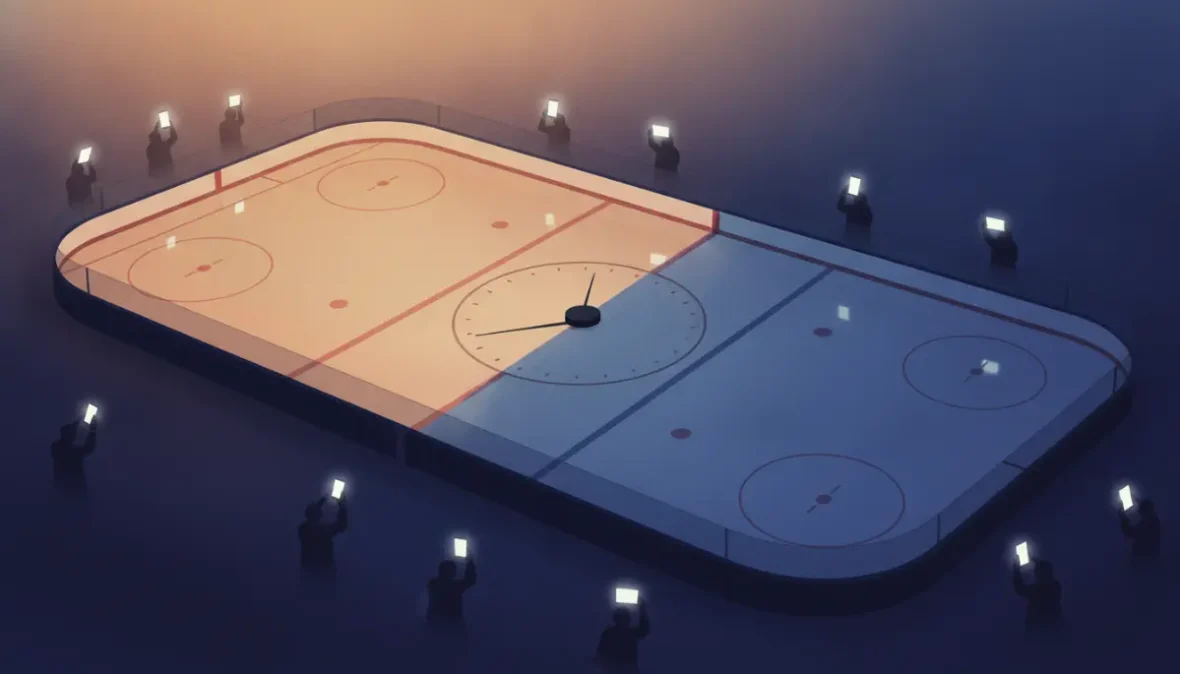
Beginning November 1, 2026, several provinces will follow a permanent daylight-time schedule, creating noticeable changes for hockey viewers across Western Canada. Alberta, British Columbia and Manitoba will no longer move their clocks back in the fall, while Saskatchewan will remain on permanent standard time, as it has since 1966.
The adjustment is especially visible during the NHL season. Most regular-season games take place between November 1, 2026, and March 14, 2027, when the rest of the country continues using standard time. That difference compresses the gap between Western Canada and the East, but it also produces later starts, unusual broadcast windows and darker winter mornings.
Why Western Fans Will See Later Puck Drops
Under the previous system, games in Eastern Canada commonly began around 5 or 5:30 p.m. Mountain Time. With Alberta remaining on daylight time, those same contests will start closer to 6 or 6:30 p.m. for viewers in Calgary and Edmonton.
The change may sound minor, but an hour can affect commuting, dinner plans and family viewing routines. It also creates complications for broadcasters trying to arrange several games in succession across multiple Canadian and American time zones.
- Eastern road games will generally begin one hour later for Alberta viewers.
- Some Western home games will start at 9 p.m. local time.
- Afternoon contests will become more valuable for families and younger supporters.
- West Coast road trips may push final whistles past midnight in Alberta.
The NHL schedule is heavily shaped by national broadcast agreements, so teams cannot simply select the most convenient local start time. The league must balance television audiences, arena availability, travel demands and overlapping games.
Calgary Faces the Most Noticeable Evening Shift
The Calgary Flames will have eight games beginning at 9 p.m. local time, including home dates on December 26 and January 16. At the same time, Calgary is scheduled for eight afternoon games starting at 2:30 p.m. or earlier, up from five during the 2025-26 season.
That split creates a schedule with very different viewing habits from one week to the next. Supporters may move from early afternoon hockey to late-night starts without the familiar seasonal clock adjustment softening the difference.
Flames president and chief executive officer Robert Hayes described the situation as something outside the club’s control. The province set the time policy, while the league and its broadcast partners determined when the games would be played.
Commissioner Gary Bettman offered a similar assessment, noting that the NHL must manage the consequences of decisions made beyond the league’s authority. Players have also pointed to the unusual variety of start times, particularly before Calgary begins an Eastern road trip on December 10.
Families and Younger Fans Face Practical Barriers
A 9 p.m. start can be manageable for adults, but it is much less realistic for children. Flames player Strome, whose children are six, five and two, said his family enjoys attending games but cannot reasonably bring the children to those late contests.
For households in that position, tickets may go unused or require a different arrangement. The issue extends beyond arena attendance: a game that ends close to midnight can also be difficult for children to watch live on a school night.
Sports media instructors have warned that hockey’s popularity does not eliminate the effect of inconvenient scheduling. When families cannot attend or stay awake for a broadcast, the league risks losing part of its regular audience.
Edmonton’s organization has emphasized access for supporters throughout Oil Country. Oilers president and chief revenue officer Stew MacDonald said making games convenient for the fan base remains a central concern.
Winnipeg’s Schedule Moves Closer to Eastern Time
Manitoba’s decision produces a different result for the Winnipeg Jets. The NHL shifted 12 home games by one hour, although none will begin later than 7:30 p.m. local time. Once the change takes effect, Winnipeg will share the same time as Toronto.
The Jets’ road calendar still includes some especially late viewing for Manitoba supporters. A visit to Vancouver on February 13 is set for 10 p.m., while the December 2 game against the Utah Mammoth begins at 9:30 p.m.
Winnipeg’s home schedule therefore becomes more manageable, but travel games can still create long nights. The same challenge applies when Calgary, Edmonton or Vancouver plays on the United States West Coast. A 9:30 p.m. Alberta start may not finish until after midnight.
Winter Light Will Change Beyond the Arena
Game times are only one part of the adjustment. Permanent daylight time will also affect the daily rhythm of winter mornings. In Calgary and Edmonton, sunrise could occur around 9 or 9:30 a.m., with northern communities such as High Level and Fort McMurray seeing even later daylight.
That trade-off may be central to the public debate. Supporters of permanent daylight time may prefer brighter evenings, while critics may find dark school and work commutes more difficult.
Alberta Premier Danielle Smith has said residents could revisit the decision at the ballot box next year if the arrangement proves unpopular. The province narrowly rejected permanent daylight time in a 2021 referendum, meaning the issue remains politically unsettled.
What Viewers Should Plan For
Fans can expect a hockey season shaped by more than standings and rivalries. The clock itself will influence when people leave work, take children to the rink, attend games and settle in for a broadcast.
- Calgary will feature eight 9 p.m. starts, including two at home.
- The Flames will also receive eight afternoon games beginning by 2:30 p.m.
- Eastern games will appear later on Alberta television schedules.
- Winnipeg’s 12 adjusted home games will remain no later than 7:30 p.m.
- Some West Coast road games will continue beyond midnight in Alberta.
- Morning commutes may take place in darkness for much of the winter.
Players may adjust quickly once the opening faceoff arrives, but supporters must reorganize the routines surrounding each game. The 2026-27 season will show whether Canadian hockey culture can adapt to a calendar that no longer changes clocks twice a year.
